Swayambhunath Stupa
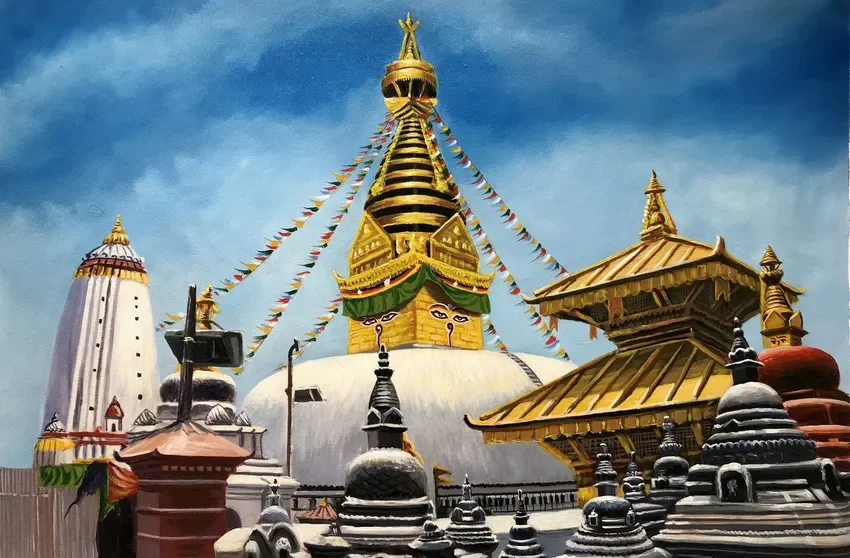
Swayambhu Mahachaitya (Tibetan: རང་བྱུང་ मཆོད་རྟེན། Rangjung Chorten, Wylie: rang byung mchod rten) is a famous Buddhist stupa located in the west of Kathmandu Valley. It is also called Mahachaitya. At the time when the valley was filled with water, Vipaswi Buddha came here, walked around the surrounding hills three times, and performed penance sitting on the top of Nagarjun. After that, on the day of Baisakh Purnima, he faced south, chanted mantras, and planted a lotus seed in the lake. On the day of Baisakh Purnima the following year, a lotus flower bloomed, in which the Swayambhu Mahachaitya is believed to have originated along with the five-colored rays (Pancharashmi). The stupa of Swayambhu is located in Kathmandu.
From Sanskrit, the meaning of Swayambhu is understood as the land that originated itself. It has a major role in the establishment of Kathmandu Valley and the history of Nepal. It is found mentioned in ancient texts that Lord Manjusri also performed penance sitting on this land before the establishment of Kathmandu. From Newari, "Syen" means self and "Gu" means forest, forming "Syengu," and this same word later became known as Swayambhu.