Heritages of Kathmandu Metropolitan City
The Kathmandu Valley, located at the foothills of the Himalayas, is carved into seven UNESCO World Heritage monument zones. These monument zones are palace squares or urban centers with palaces, temples, and religious complexes of Kathmandu, Patan, and Bhaktapur, along with Swayambhu, Boudhanath, Pashupatinath, and Changu Narayan. The religious site at Swayambhu includes the oldest Buddhist stupa in the valley. Nepal’s largest stupa lies at Boudhanath. Pashupati is home to a major Hindu temple complex, and Changu Narayan preserves a traditional Newari settlement and ancient inscriptions dating back to the 5th century.
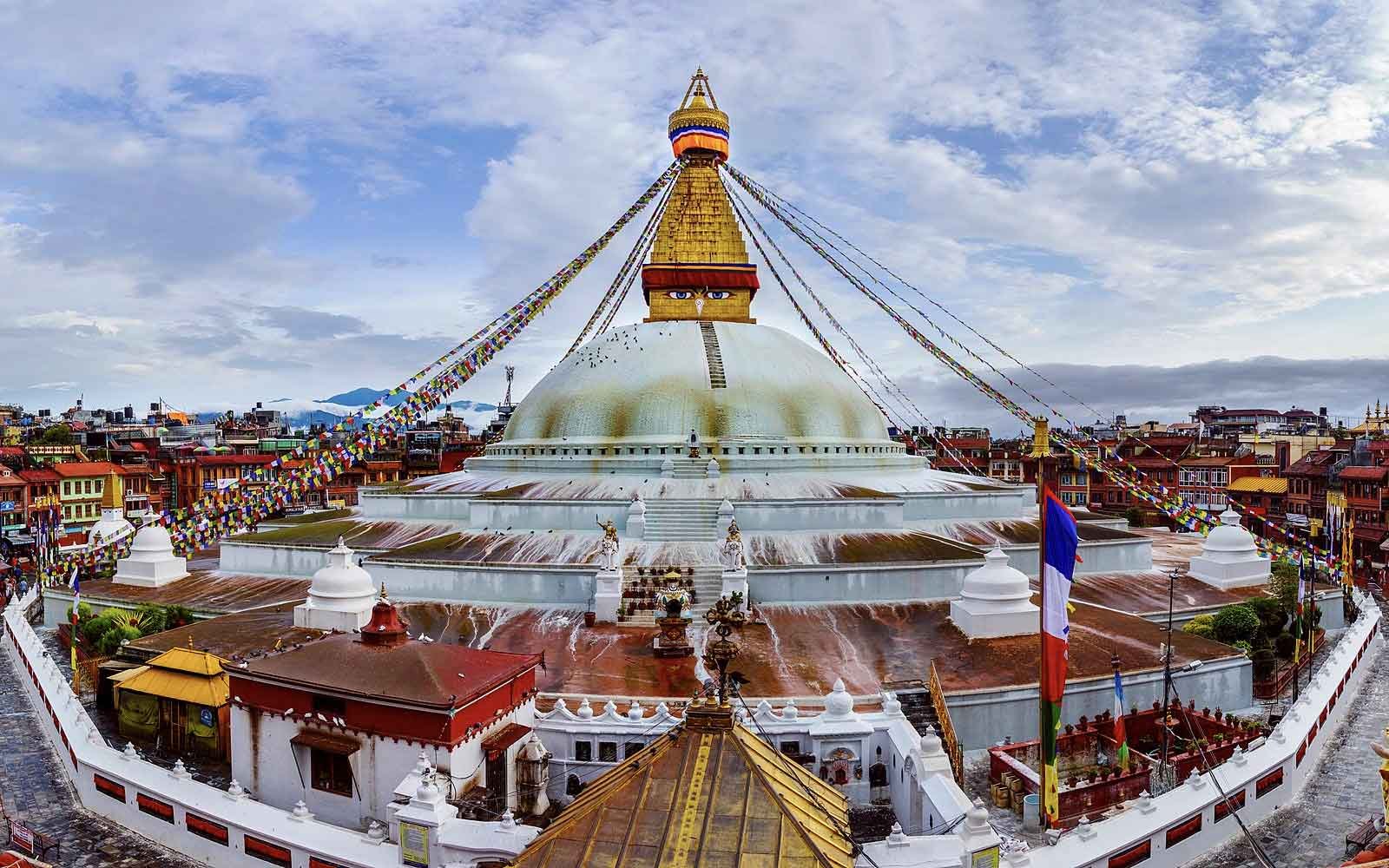
Boudha Stupa
Among the stupas located in the Kathmandu Valley, the Boudhanath Stupa is the largest. It is situated approximately 8 km east of the capital. Boudhanath is also known as "Swasti." The dome of this Buddhist monastery, believed to be located on the ancient trade route to Tibet, measures 36 meters in diameter. The Boudha area, which is home to a settlement of Tibetan refugees, is often crowded with tourists visiting for religious and other reasons. The construction of this stupa was initiated by Jyajyima (a poultry herder) Dechhog. According to the text titled Shrutimukti, her story is as follows: Countless eons ago, in the presence of Tathagata Amitabh, Bodhisattva Avalokiteshvara made a vow to free all sentient beings from worldly suffering. After liberating an immeasurable number of beings, he went to the peak of Mount Potala. Thinking that no being was left to be liberated, he looked down, only to see that the beings in the six realms had not decreased at all. Realizing that he might not be able to liberate all beings from the ocean of worldly existence, he shed tears. Taking those teardrops with his fingers, he vowed that even these two drops of tears should benefit and liberate sentient beings. In accordance with that vow, they were born in the Trayastrimsa (Heaven of the Thirty-Three) as the two daughters of Shakra Devendra, named Gangma and Gangchungma. Because Gangchungma, the younger daughter of Devendra, stole her elder sister's flowers, she violated divine law and fell into the human world. During the reign of Kashyapa Buddha, she was born into an ordinary family in a region of Nepal called Maguta. For many years, she earned her living as a poultry herder. During that time, she developed relationships with four men who later became her husbands. From these four husbands—a horse herder, a pig herder, a dog herder, and a poultry herder—she gave birth to one son each, named Tajiyibu, Phagjiyibu, Khyijiyibu, and Jyajiyibu, respectively.
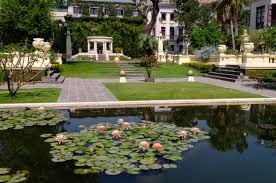
Garden of Dreams
The Garden of Dreams (Swapna Bagaicha) is a site of historical and touristic importance located at the entrance to Thamel, Kathmandu's tourist hub. Presenting a unique example of architecture, this garden is also known as a natural museum. Some refer to it as a "Heaven of Dreams," while others call it "Mini Europe." Field Marshal Kaiser Shumsher Rana of the then Nepal Army observed the garden of King Edward VII during his visit to the UK. Influenced by that experience, he constructed this garden in 1920. After the death of Kaiser Shumsher, the garden was handed over to the Government of Nepal in 1964 (2021 BS), but it suffered from neglect for decades. Following nearly seven years of reconstruction, the garden was brought back into operation in 2007 (2064 BS). The design of this garden, built in a historical and classical style, was created by the senior architect Kishore Narshingh Rana. The garden is made more attractive by the pavilions (resting houses) named after the six seasons, ponds, European-style verandas, and houses for various species of birds. It is a place for enjoyment not only for young couples but also for families; the entry fee is 80 rupees for Nepalis, 160 rupees for foreigners, and 40 rupees for senior citizens and children. This peaceful and clean garden is suitable for gaining knowledge of historical architecture and entertainment alongside natural beauty. Within the Garden of Dreams, private and group ceremonies as well as cultural and other programs can be organized. To facilitate those coming for sightseeing and entertainment, "Kaiser Cafe" is operated within the garden premises.
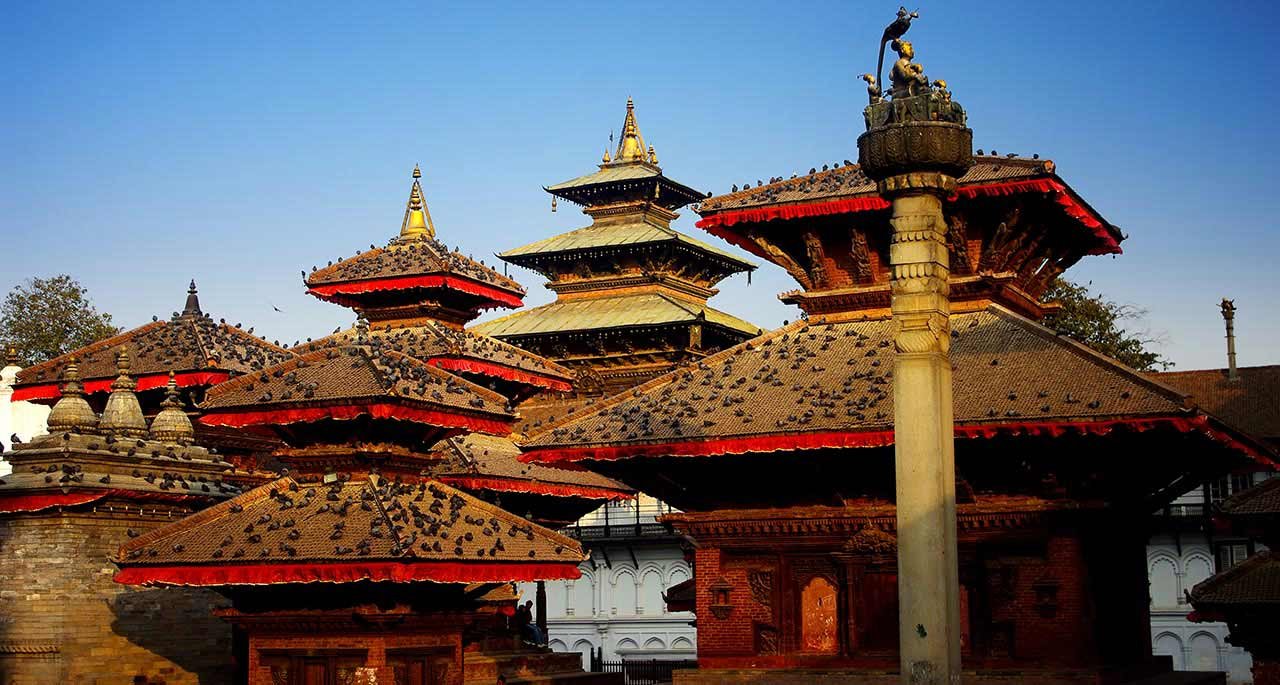
Kathmandu Durbar Square
Kathmandu Durbar Square, also known as Hanuman Dhoka, is one of the three royal palace squares in the Kathmandu Valley and a UNESCO World Heritage Site. Located in the heart of the city, it showcases the magnificent Newari architecture, intricate wood carvings, and stone sculptures of the Malla and Shah dynasties. The square is home to the Living Goddess Kumari, the multi-roofed Taleju Temple, Kal Bhairav, and the ancient Hanuman Dhoka Palace. It remains a vibrant hub for traditional festivals, religious ceremonies, and historical legacy.
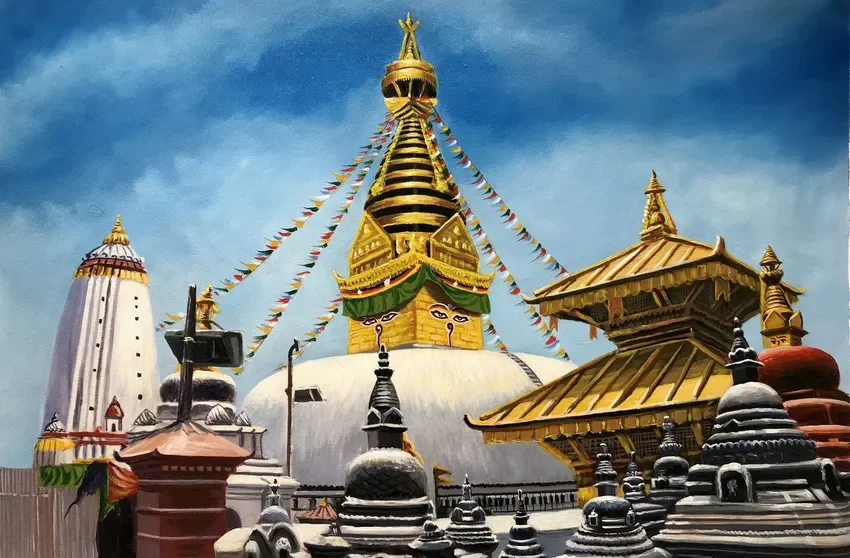
Swayambhunath Stupa
Swayambhu Mahachaitya (Tibetan: རང་བྱུང་ मཆོད་རྟེན། Rangjung Chorten, Wylie: rang byung mchod rten) is a famous Buddhist stupa located in the west of Kathmandu Valley. It is also called Mahachaitya. At the time when the valley was filled with water, Vipaswi Buddha came here, walked around the surrounding hills three times, and performed penance sitting on the top of Nagarjun. After that, on the day of Baisakh Purnima, he faced south, chanted mantras, and planted a lotus seed in the lake. On the day of Baisakh Purnima the following year, a lotus flower bloomed, in which the Swayambhu Mahachaitya is believed to have originated along with the five-colored rays (Pancharashmi). The stupa of Swayambhu is located in Kathmandu. From Sanskrit, the meaning of Swayambhu is understood as the land that originated itself. It has a major role in the establishment of Kathmandu Valley and the history of Nepal. It is found mentioned in ancient texts that Lord Manjusri also performed penance sitting on this land before the establishment of Kathmandu. From Newari, "Syen" means self and "Gu" means forest, forming "Syengu," and this same word later became known as Swayambhu.
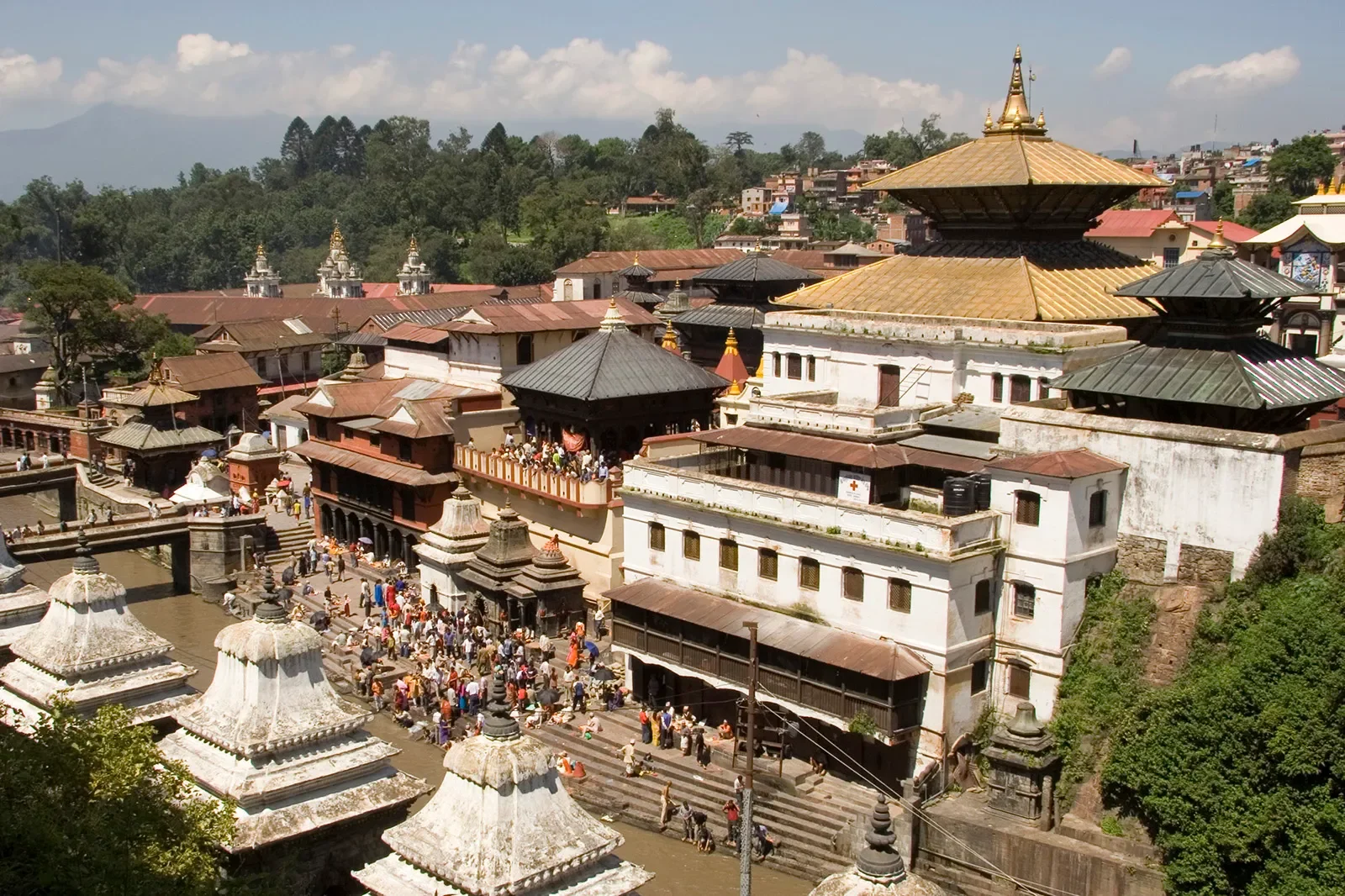
Pashupatinath Temple
The Pashupatinath Temple, located in the Kathmandu district, is a site of immense historical, religious, and touristic importance. Situated on the banks of the Bagmati River in Ward No. 8 of the Kathmandu Metropolitan City, the temple complex spreads across 240 hectares of land. As a vital part of Nepal's cultural heritage, Pashupatinath is a UNESCO World Heritage Site, having been inscribed on the list in 1979. Because it is proven to be the oldest religious site in the Kathmandu Valley—home to ancient places of worship, shrines, temples, idols, and historic inscriptions—the Pashupatinath area resembles an open museum. The Pashupati area has always remained a center of shared faith and reverence for devotees of various major sects, including Shaiva, Shakta, Vaishnava, Buddhist, Jain, Saur, Ganapat, Nath, and Sikh. The region also houses diverse monuments, places of worship, and akharas (religious assembly points) belonging to these different traditions. Pashupatinath exists as a living heritage; it is a sacred place where rituals from birth to death are performed, with the Bagmati River further enhancing its divine glory.